
India just cracked the code on 400 years of energy independence
On the night of 6 April 2026, at 8:25 PM IST, a quiet milestone unfolded on the Tamil Nadu coast that the world's energy press largely missed.
India's Prototype Fast Breeder Reactor (PFBR) at Kalpakkam achieved first criticality, the moment a nuclear chain reaction becomes self-sustaining. With that one event, India became only the second nation on Earth, after Russia, to operate a commercial fast breeder reactor. But the headline isn't the reactor. It's what the reactor unlocks.
The paradox behind the strategy
India holds less than 2% of global uranium reserves but roughly 25% of the world's thorium. The world's reactors run on uranium. India's beaches are full of thorium.
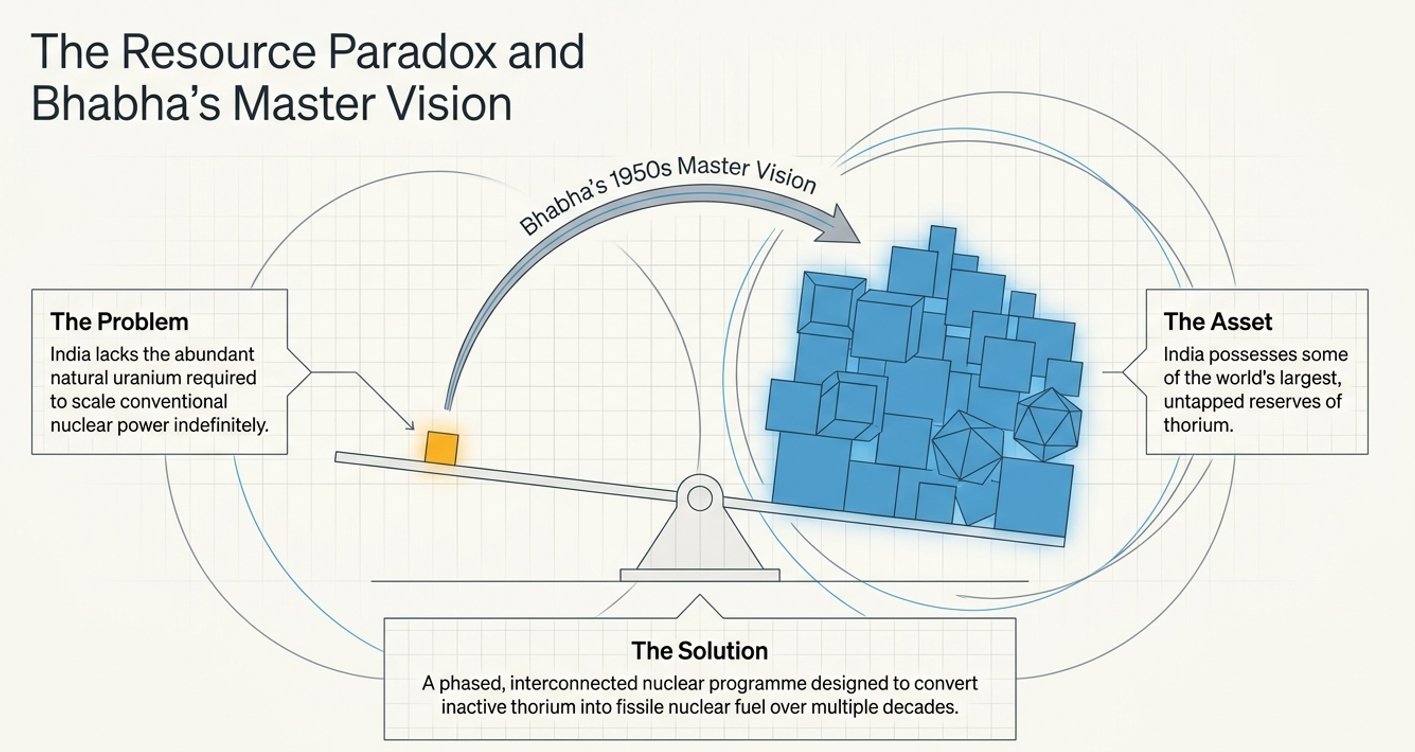
For 70 years, this asymmetry has shaped Indian energy policy. The solution, designed by physicist Homi Bhabha in the 1950s, was a three-stage nuclear program to systematically convert India's resource constraints into a strategic moat.
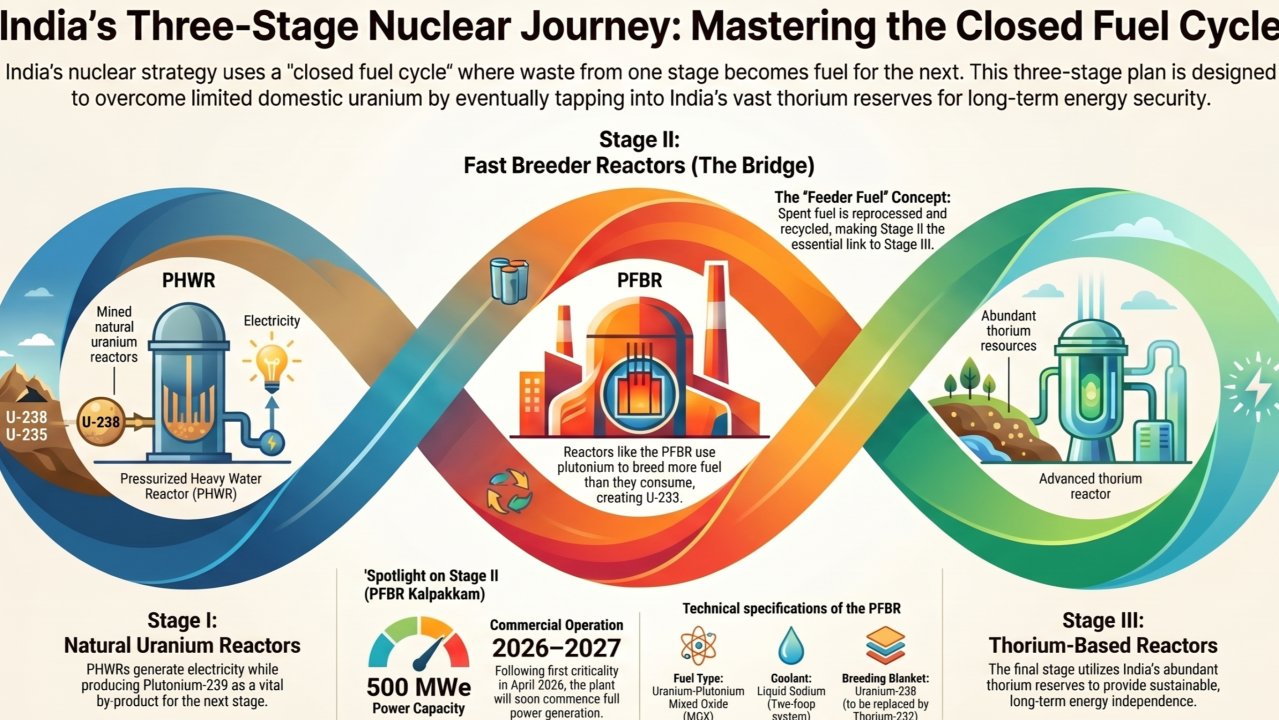
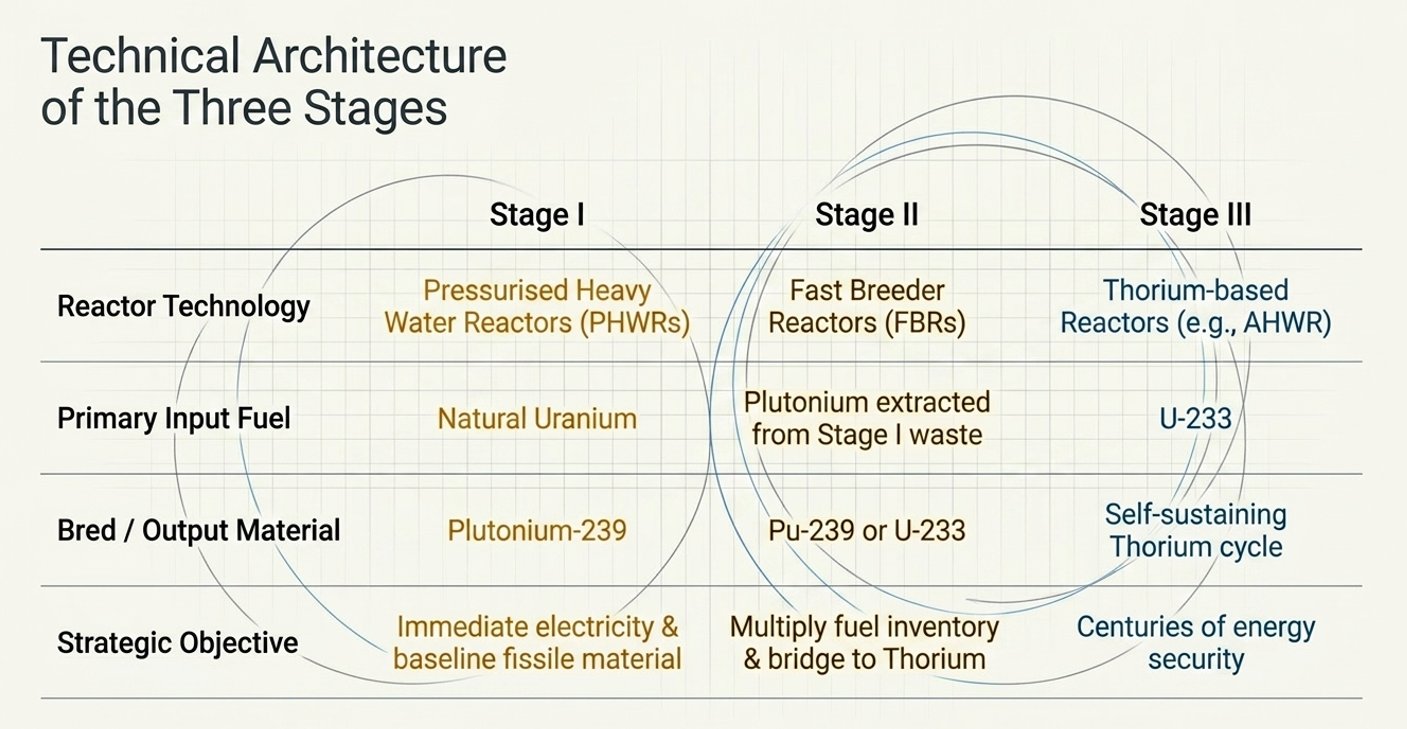
Stage 1: Burn uranium in conventional reactors ✓
Mature since 1969.
Stage 2: Use leftover plutonium in fast breeders to make more fuel than they consume ✓ Just achieved
This is what 6 April 2026 unlocked.
Stage 3: Switch the breeders to thorium for centuries of domestic energy
The next frontier.
April 6, 2026, was the day Stage 1 handed the baton to Stage 2.
What makes a "breeder" different
A traditional reactor is a fuel consumer. It uses water to slow neutrons enough to split U-235, but burns less than 1% of mined uranium; the other 99% becomes long-lived waste. A fast breeder is a fuel producer. It uses fast, un-moderated neutrons cooled by liquid sodium. Those neutrons bombard a "blanket" of U-238 surrounding the core, transmuting it into fissile Pu-239. The reactor literally manufactures more fuel than it burns. Swap the U-238 blanket for thorium-232, and you breed U-233, the fuel that powers Stage 3.
Why this is a big deal strategically
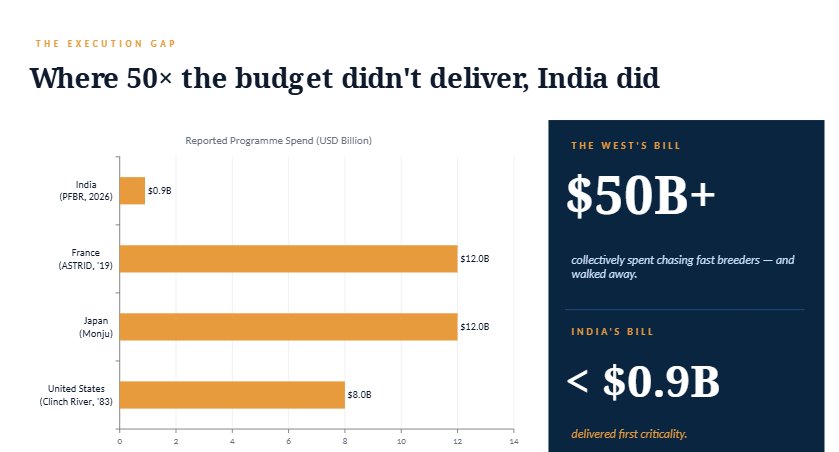
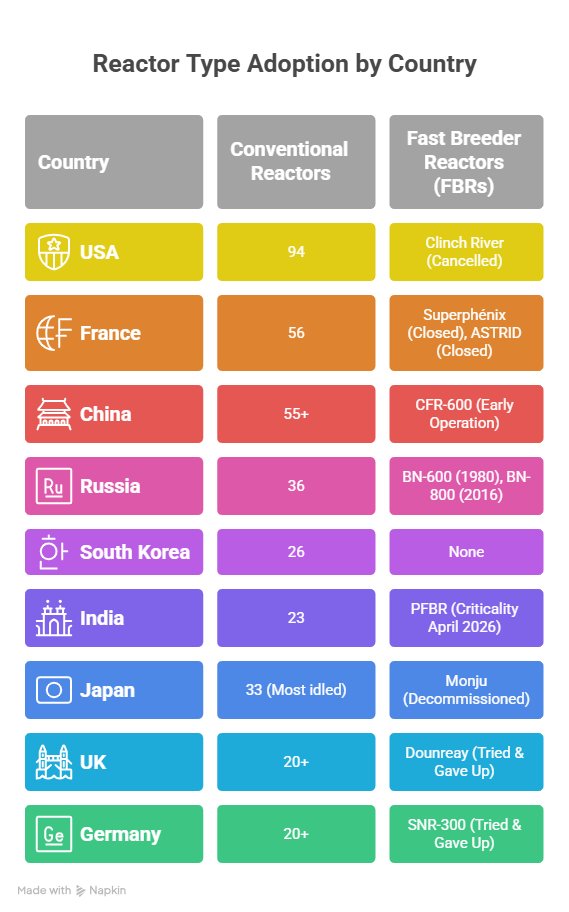
Most advanced economies tried this and gave up. The US killed its Clinch River project in 1983. Japan's Monju shut after a sodium leak. France abandoned ASTRID in 2019 after spending over $12 billion. Collectively, the West spent more than $50 billion chasing fast breeders and walked away. India, working with a budget reportedly under $900 million, just made it work.
1. Energy sovereignty
No more uranium imports from Russia, Kazakhstan, France or Uzbekistan. Long-run fuel becomes domestic sand on the Kerala coast.
2. Near-monopoly on Gen-IV tech
With France, Japan, US, UK and Germany all out, only Russia and India own working commercial breeder tech. Rare for a democracy.
3. Net-zero 2070 becomes plausible
India's climate target needs ~4× nuclear capacity growth by 2047, only deliverable with breeders plus thorium.
4. A bridge to private nuclear
The 2025-26 budget opened nuclear to private players. Expect Reliance, Tata and Adani to move on SMRs and FBRs within 24 months.
The number worth remembering
By 2047, India aims for 100 GW of nuclear capacity, up from 8.78 GW today. By 2070, the thorium economy could deliver an order of magnitude more. If executed, India will have done something no country has done at scale: built a closed-loop, self-fuelling, low-carbon energy system from a position of resource scarcity.
What to watch next
The next 12–36 months will tell us whether 6 April was a milestone or a monument. Three signals matter: grid synchronization (when does PFBR actually start feeding the Tamil Nadu grid?), commercial FBR announcements (a formal green light on the next 600 MWe commercial breeders), and the thorium blanket test (the first insertion of Th-232, the moment Stage 3 begins in earnest).
India just became the only democracy running commercial-scale fast breeder technology, opening a thorium pathway that could underwrite 400+ years of domestic, low-carbon power.
The celebration is about direction, not arrival. But for a nation of 1.4 billion building toward developed-economy energy demand, that direction is everything.